For years, formulators have been trapped in a frustrating compromise: deliver the anti-aging power of retinoids, or protect the skin barrier.
Hydroxypinacolone Retinoate (HPR) has broken this trade-off. As a direct-acting retinoic acid ester, HPR is no longer a niche “alternative”; it is rapidly becoming the standard for next-generation anti-aging formulations.
But what is actually driving this shift? And what do global buyers need to know before switching their production lines? Here is the data and market reality.
1. The Regulatory Catalyst: Why Brands Are Forced to Pivot
The regulatory landscape is the biggest driver of HPR adoption.
In 2024, the EU Scientific Committee on Consumer Safety (SCCS) finalized its opinion on Vitamin A. The EU is moving to restrict traditional Retinol concentrations to 0.3% (3000 IU/g) in face products and 0.05% in body lotions.
For brands in the EU and UK, reformulating is no longer optional; it is a legal requirement.
Because HPR is a different chemical entity (an ester), it does not currently fall under the same SCCS retinol restrictions. This allows European brands to use HPR at effective levels without violating the 0.3% retinol cap.
2. Market Growth: The Numbers Behind the Shift
The data reflects this regulatory pivot. According to market intelligence from Mintel and CosmeticsDesign, the number of global skincare launches containing HPR has grown by over 140% in the last three years.
Major beauty conglomerates (such as L’Oréal and Estée Lauder) have quietly incorporated HPR into their premium anti-aging lines. The global market for bio-active retinoids is projected to reach $1.2 billion by 2030, with HPR capturing an increasingly dominant share of new product development (NPD).
Why? Because consumer data shows high dissatisfaction with traditional retinol. In a recent formulation survey, over 60% of consumers reported experiencing redness or peeling with standard retinol. HPR offers a solution to this “retinol fatigue.”
3. The Bio-Chemistry Advantage (For Formulators)
Standard retinol requires two enzymatic conversions in the skin (Retinol → Retinaldehyde → Retinoic Acid). This process is inefficient and irritates the skin.
HPR is a retinoic acid ester. It binds directly to the retinoic acid receptors (RAR) without needing conversion. This direct action means:
- Higher efficacy at lower concentrations.
- Significantly lower irritation potential.
- Better stability. Traditional retinol degrades rapidly under UV light and heat. HPR is highly stable, making it ideal for hot-fill manufacturing and daylight-exposed packaging (like clear glass bottles).
4. The Supply Chain Reality: Why Purity Matters
As a global supplier, LYVBIO CO LTD understands that HPR is a complex molecule to synthesize.
Many lower-grade HPR products on the market contain residual solvents or high levels of unreacted starting materials, which can lead to batch-to-batch color variations (from white to yellow-brown) and reduced efficacy.
Our solution at LYVBIO:
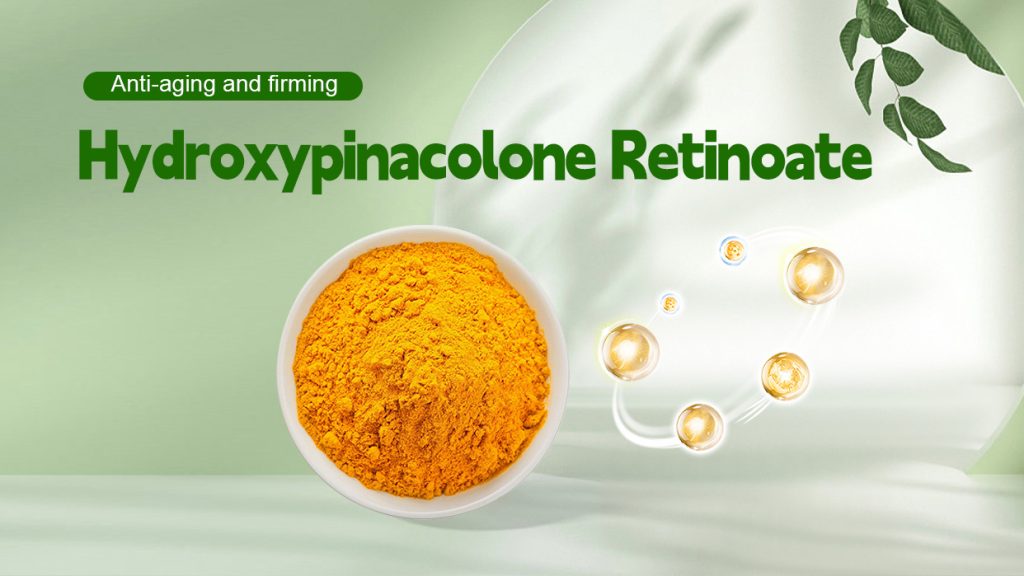
We supply Hydroxypinacolone Retinoate (CAS: 893412-73-2) with a guaranteed 99% purity (HPLC).
- High Purity Grade: Ensures minimal color variation and consistent formulation results.
- Standard Packaging: We provide standard 1KG aluminum foil bags (vacuum-sealed, light-resistant) to preserve stability during global transit. For larger B2B orders, we offer customized bulk packaging to match your manufacturing scale.
- Full Documentation: Every batch comes with a complete COA, MSDS, and stability data to support your compliance filings.
5. Formulation Insights for R&D Teams
For your next HPR project, consider these technical points:
- Solubility: HPR is highly lipophilic (oil-soluble). It dissolves easily in Caprylic/Capric Triglyceride or Isododecane, making it perfect for anhydrous serums and oil gels.
- Temperature: Add HPR during the cool-down phase (below 40°C) to ensure maximum stability.
- Synergy: Pair HPR with Niacinamide or Ceramides to further mitigate any potential irritation and support the skin barrier.
The shift to HPR is not just a trend; it is a structural change in the skincare industry driven by European regulations, consumer demand for gentle anti-aging, and superior formulation stability.
At LYVBIO CO LTD, we are committed to providing high-purity HPR and technical support to help brands navigate this transition.
Ready to reformulate? Contact our technical sales team for the latest COA, MSDS, and a 1KG sample to begin your R&D trials.
 English
 Russian